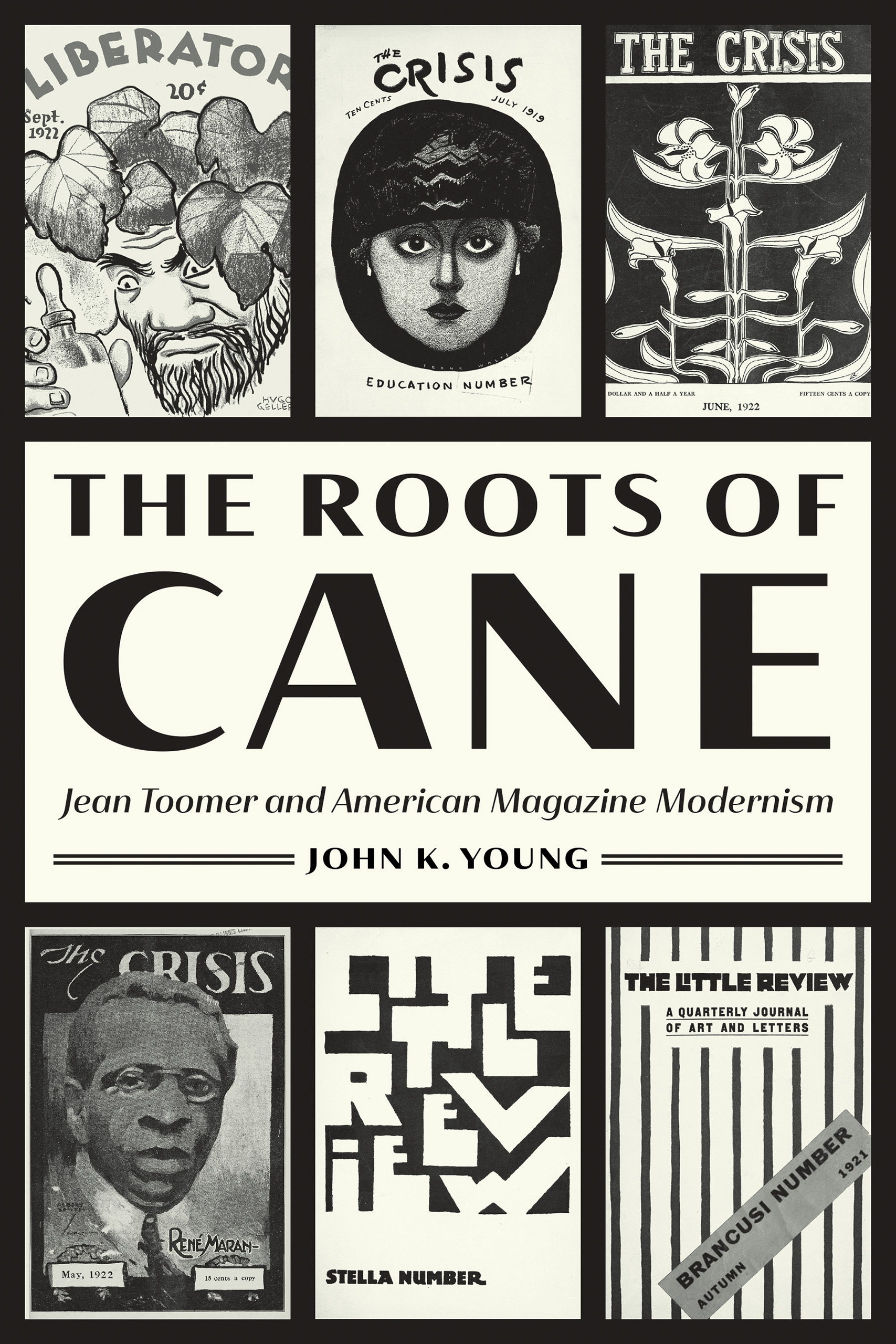
The Roots of Cane proposes a new way to read one of the most significant works of the New Negro Renaissance, Jean Toomer’s Cane. Rather than focusing on the form of the book published by Boni and Liveright, what Toomer would later call a single textual “organism,” John Young traces the many pieces of Cane that were dispersed across multiple modernist magazines from 1922 through 1923. These periodicals ranged from primarily political monthlies to avant-garde arts journals to regional magazines with transnational aspirations.
Young interweaves a periodical-studies approach to modernism with book history and critical race theory, resituating Toomer’s uneasy place within Black modernism by asking how original readers would have encountered his work. The different contexts in which those audiences were engaging with Toomer’s portraits of racialized identity in the Jim Crow United States, yield often surprising results.
“One of the greatest strengths of Young’s book is his careful attention to the editorial and personnel shifts in the magazines he examines, and he avoids falling into the all-too-common mistake in periodical studies of portraying a magazine’s history as homogenous from beginning to end. . . . Young also shows how magazines themselves can be understood as ‘works’ in multiple senses—that is, both a single issue and the entire run of a magazine might be read as a complete works. . . . The Roots of Cane makes valuable contributions to modernist studies, Toomer scholarship, and periodical studies.”—American Literary History Review